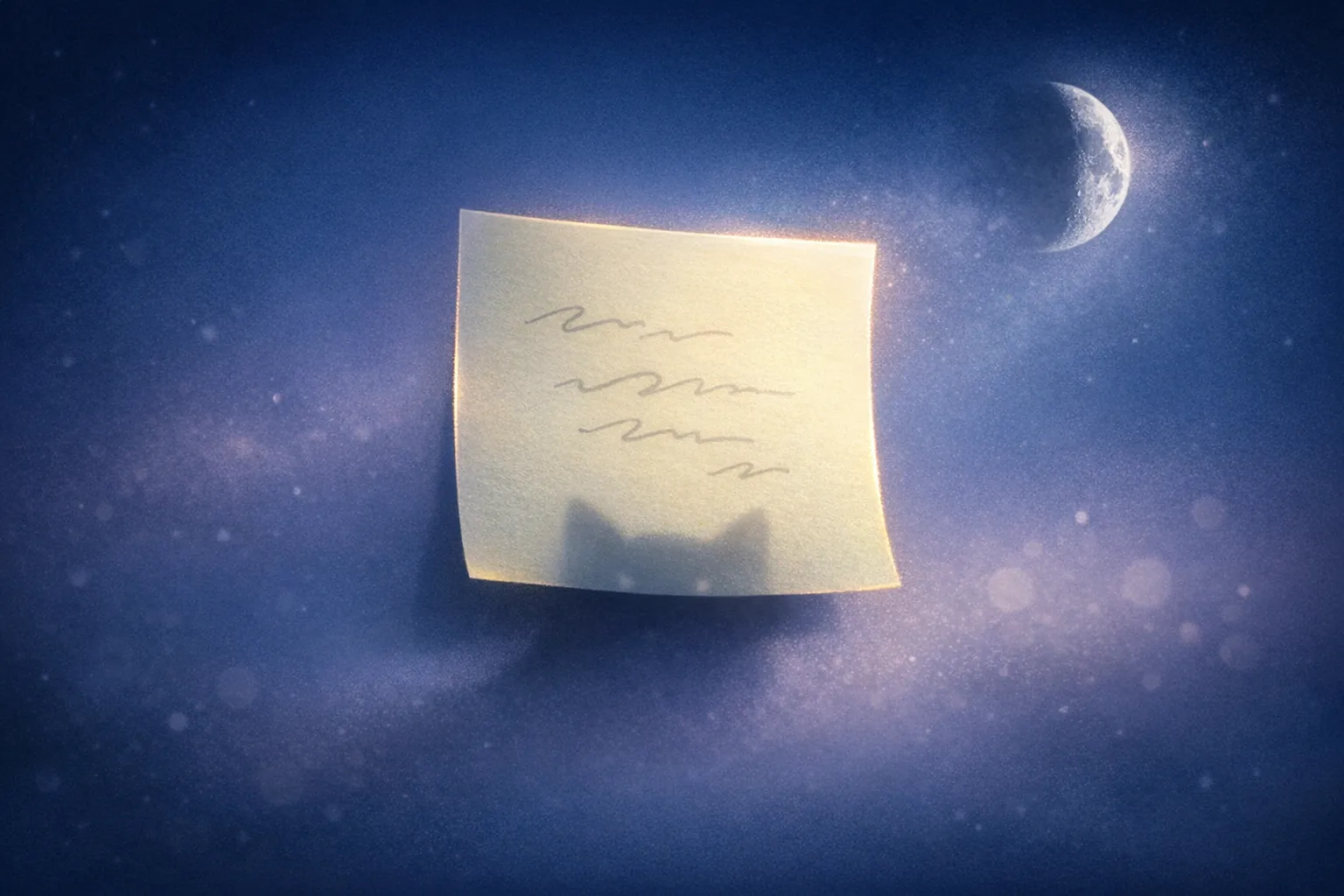
The Dreamy Veil of the Third-Quarter Moon
Imagine waking up at 3 AM under the eerie glow of the third-quarter moon, scribbling a half-forgotten dream about a cat with golden eyes whispering secrets in a language you almost understand. Your handwriting looks like a comet took a shortcut across the page. Still, you feel the tug: there was meaning here. That tug is the third-quarter moon’s specialty. Astrologically, this phase is when the Moon, that patient librarian of tides and feelings, turns us toward the return cart of our month – what’s due back, what’s been read, what still needs a sticky note before it goes. The third-quarter moon isn’t dramatic like the full moon or raw like the new moon. It’s the editorial desk at the back of the cosmic library, where the red pencil lives. We’re asked to revise, release, and re-shelve.
Dreams under this half-lit watcher often bend inward. If the full moon throws parties in the atrium, the third-quarter moon invites you to the archive room, keys humming in your palm. The tone gets quieter, but not dull. Symbols sharpen, like margins marked with those tiny stars you used to draw in school. We remember odd fragments – a hat on a river, a phone that rings with no sound, a cat with molten eyes – because they are exactly the bits the psyche wants to save. In astrology-speak, this phase emphasizes integration: taking what the month revealed and deciding what to keep. If “retrograde” is the sky’s rewind button (a period of review and rethinking as a planet appears to move backward), the third quarter is more of a soft, luminous pause. Not quite rewind, more of a thoughtful flip-through.
So, tonight’s dream – however scrappy its Post-it trail – can act like a wayfinding card, the kind librarians slip into the back pocket of a book. You don’t need to over-analyze every symbol like a detective with red yarn. Instead, practice being a curator. The question of this moon is gentle but firm: What is true for you now, and what can be returned to the shelf? Every symbol is a nudge. Every whisper is a note in the margin that says, “Start here.”
Whispers of Half-Light: Why the Third-Quarter Moon?
The third-quarter moon is like a stage between worlds, where your dream-actors come back for curtain call, bowing with pockets full of props. We’re not building the scenery anymore (that’s the new moon), and we’re not dazzling the audience (that’s the full moon). We’re gathering what worked, closing the curtains, and packing meaning into a suitcase we can carry. In practical terms, that means dreams at this time tend to feel reflective, a bit wry, and surprisingly precise. Not always grand adventures – sometimes a single hallway, a single conversation, a single look. But the details thrum with sense, as if underlining themselves.
This half-light is devotional to thresholds. Your intuition is sensitive to what’s departing and what’s due for compost. Think of your mind as a cosmic library filled with dusty tomes, some you chose, some you inherited. The third-quarter moon switches on the desk lamp beside the “Returns” chute. You notice which titles you keep trying to renew even though they bore you, and which slim volumes keep hopping into your bag like friendly stowaways. Dreams become cartographers in this period, sketching little maps in the margins: a fork here, a locked door there, a stray path across the lawn. The test is not to decode every glyph like an exam, but to feel the drift of the map. Where is it pointing? Toward the door with warm light underneath, or the one echoing with old echoes?
Because the Moon reflects sunlight at an angle during this phase, the world itself looks slightly edited, and so does your inner scene. Old stories soften at the edges. New insights tingle but don’t demand you shout them from rooftops. If you wake remembering only a single object – a key, a cup, a train ticket – bless it. That object is the librarian sliding you a clue card. Place it on the day’s shelf. Let it rearrange what reaches your hand next. The third-quarter moon prefers you to travel light: one image, one sentence, one subtle pivot in behavior. You don’t need a grand plan, just an honest shelf.
Cat with Golden Eyes: Dream Symbols and What They Might Mean
A cat with golden eyes prowls the stacks; you’re pretty sure it knows the restricted section better than anyone. Talking animals in dreams often play the role of instinct guides – embodied intuition with whiskers. Cats, especially, are guardians of thresholds. They pad between rooms, pause at doorways, blink slowly as if to say, “I’ve seen this shelf arrangement before, but have you?” Gold in dreams often represents distilled value – what glows when everything else gets dusted off. So a cat with golden eyes is like your intuition looking straight at you, asking for trust while throwing a beam across the words you were about to skip. If it whispers in a language you almost understand, that “almost” is not a failure. It’s the invitation. You’re being asked to translate feeling into action, not word-for-word syllables.
Moonlit settings tend to rinse the color palette until essentials stand out – shadows, edges, glints. They can suggest privacy, the kind of sacred hush where the truest questions speak up. If your dream sets the scene under moonlight, it may be cueing you to honor secrecy not as withholding but as gestation. You don’t have to announce the thing you’re incubating. You can let it glow quietly while you learn its shape. Talking animals, unfamiliar scripts, whispering corridors – these are not puzzles to solve so much as atmospheres to respect. They give you permission to move by sensation: a yes-heat, a no-cool, a not-yet-breeze.
Let’s translate the cat, softly. If it leads you to a staircase, you may be invited to track layers – past decisions, old habits – and choose which step you’re done with. If it paws at a closed drawer, it could be your attention nudging toward a skill or boundary that wants airing out. If it curls on a book you’re trying to read, that’s your intuition asking: “Do you believe this page, or did you check it out because everyone else did?” Remember, in this library, meaning is relational. A ladder means courage in one person’s dream, rest in another’s. Let the symbol find you, not the other way around. If the whispering is in a nearly-known tongue, keep a note of its sound quality – is it crisp, watery, metallic? That texture is your compass when words blur.
Mapping Intuition: A Gentle Step-by-Step Through Your Night Notes
Now we get practical, but with velvet gloves. You don’t need a dream PhD; you need a quiet table and a pen that doesn’t squeak. Think of this as a short after-hours tour with the night librarian. We’ll keep it simple and kind.
-
Before sleep: Place an index card by your bed like a library request slip. Jot a one-line prompt: “Show me what wants returning” or “Light up what’s gold today.” Prompts give your psyche a call number to fetch.
-
Upon waking: Catch the first image. Not the whole dream – the first image that clings, even if it’s silly. Write it like a title. Example: “Cat with golden eyes on the reference desk.” If you remember dialogue, record a phrase or two. Spelling doesn’t matter; essence does.
-
Sensation tagging: Next to your title, note three sensations. Warm/cool. Spacious/tight. Quiet/electric. This attaches a felt bookmark to the symbol, invaluable later when your brain tries to rewrite the scene into sense it didn’t have.
-
Micro-translation: Ask the image, “What role are you playing for me today?” Examples: The cat as Gatekeeper. The moonlit hallway as Pause. The whisper as Limit. Choose one role – only one. Single-role translation prevents symbolic soup.
-
Shelf action: Pick a tiny action that honors the role. If the cat is Gatekeeper, you might set one boundary today: decline a meeting, close an app, say “I’ll think on it.” If the hallway is Pause, schedule a 10-minute no-input walk. If the whisper is Limit, pick one item to return – an obligation, a script, a playlist that no longer suits.
-
End-of-day check-in: Tonight, glance back at your index card. Did the tiny action shift anything? Even one degree counts. This is the third-quarter promise: small edits yield cleaner shelves.
If your dream arrives in fragments – cat eyes, a humming elevator, a soft bell – treat them like scattered pages from the same chapter. Arrange them by feeling, not logic. Which fragment warms your chest? Which pinches? Let the warm one be your ink for the day; let the pinching one be what you return. Resist the urge to translate everything at once. In the cosmic library, the kindest scholars read in margins and trust that tomorrow’s page will clarify today’s footnote.
The Library After Midnight: Integrating the Month’s Story
By the time the third-quarter moon slips toward its waning crescent, you’ll have a handful of midnight Post-its – your private catalog of hush and highlight. Integration here means gently re-shelving the month: placing your wins where you can find them again, releasing the dusty anthologies of “should,” and moving a discovered talent to eye level. Intuition thrives on circulation. When you return what’s done, the stacks breathe. When you keep what’s gold, the lamp glows steadier. This is not a purge; it’s curation, the excellent art of choosing companions for your mind.
You may notice patterns across nights. Perhaps talking animals keep volunteering as docents. Maybe the moonlight always falls on thresholds – porches, gates, subways, that airport moving walkway that never moves fast enough. Ask yourself: What threshold am I actually at in waking life? A conversation you’ve postponed? A creative avenue licking at your ankles? A rest you keep denying? Under this moon, timelines loosen; the psyche shows you the chapter ending before you’ve typed the final paragraph. It’s kindness, dressed as symbolism.
If you want company as you explore, consider a shared nocturnal practice: a friend you text each morning with a three-line dream title and sensation tags. Witnessing amplifies clarity; it’s like opening a skylight in the archive room. Or, if your curiosity is piqued toward professional insight, you might book a psychic reading specifically timed near the third-quarter phase to frame your dream motifs within a larger intuitive arc. The goal isn’t prediction; it’s perspective, the librarian’s high ladder view of your shelves.
Most crucially, keep your humor. Dreams at this phase can be serenely strange – like a dignified professor in slippers. They’ll hand you odd gifts: a lemon that sings, a key that only opens laughter, a cat who refuses to translate but purrs when you’re honest. Accept them. Place them where you’ll see them tomorrow. When the month turns and the moon thins to a silver lyric, your library will be lighter, your map simpler. You’ll know which book to open next because it’s already in your hands, warm from the light you left on.

