When The Moon Cradles Your Questions
I always think the waxing crescent looks like a cradle – an upturned bowl catching our newest questions before they spill away. It’s the moon’s shy “yes,” the first spark after darkness when a plan or desire begins to hum. On nights like this, I notice how curiosity grows quick legs: it skips, it scampers, it plays at the edge of certainty. The waxing crescent isn’t a full manifesto; it’s a hint. It’s a soft syllable we lean toward, a tide gathering courage. In that sliver of light, you can almost hear your thoughts shedding their daytime armor, getting honest with themselves.
Someone once asked me what to do with that itch of possibility, that early-phase rustle of “Could this be real?” My answer is rarely linear. I suggest kindling. Not a schedule or a spreadsheet, but a campfire’s tender kind: ideas struck like matches, questions layered like twigs, breath coaxing a small flame into a lively one. The moon, at this phase, wants you to wonder without verdict, to sketch with smoke and memory. Everything is potential; nothing is fixed.
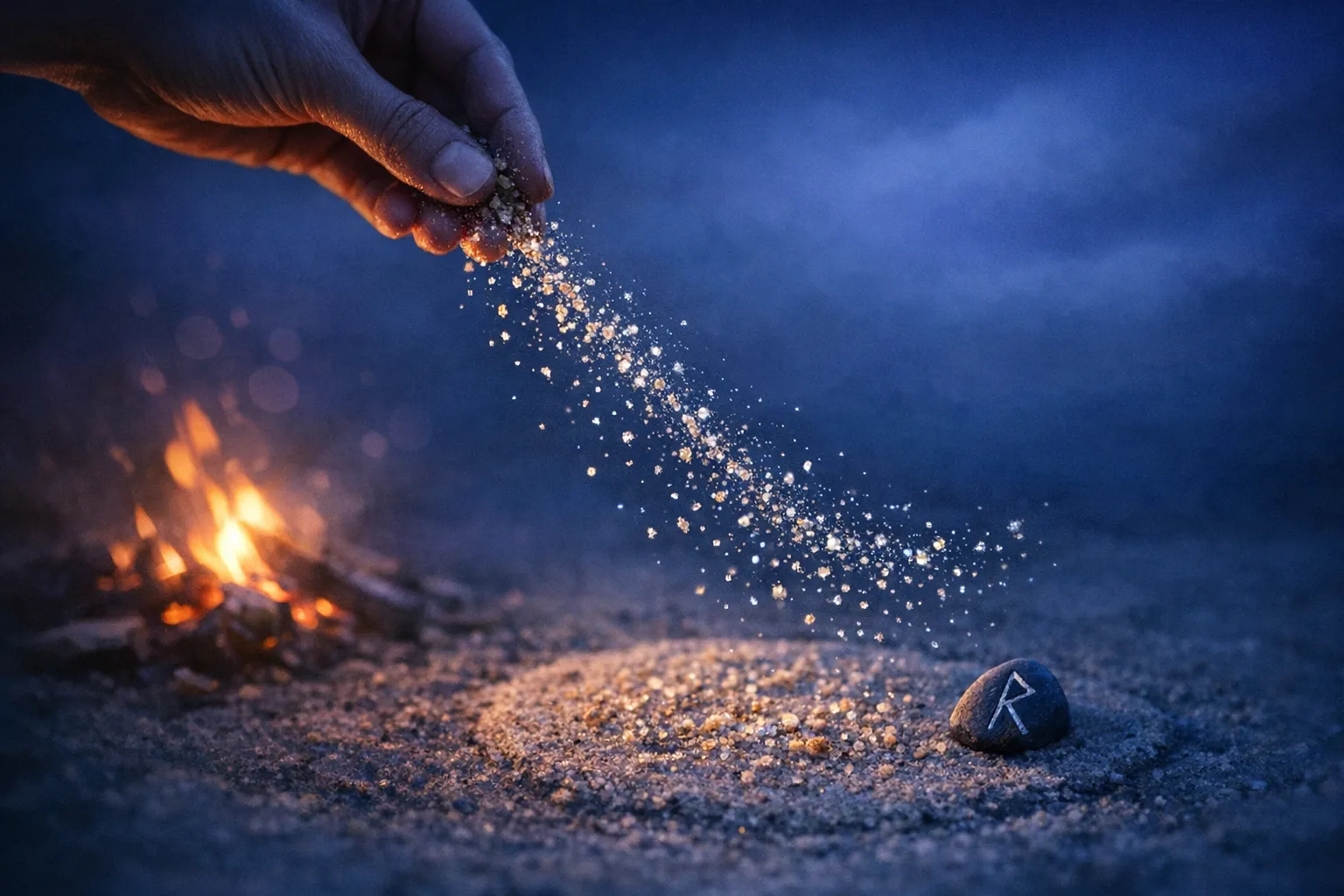
Now, picture the quiet between fire crackles. Your hands warm, your breath ghosting a little. You hold a pouch of toasted breadcrumbs – golden, fragrant, light as whispers. You scatter them on the ground like you’re seeding a field and watch them land as dots and commas. The ground becomes a star map writ in crumbs, the night above answering with its own silver script. Somewhere between those two texts – crumb and star – you find your question shaped, not answered exactly, but understood. If you kneel to look closer, patterns rise: a curve like a boat, a trail like an arrow, a loose braid suggesting a path that twines instead of sprints. The waxing crescent doesn’t hand you a verdict; it tucks your question into a sling that says, Carry this close, and you’ll feel when to set it down.
Opening Up To Celestial Whispers
There’s a way the mouth of night opens when you listen without trying to trap what you hear. People talk about “omens” and “signs,” but I think of them as soft taps, lightly asking, “Are you awake?” The waxing crescent is a specialist in such taps. It doesn’t flood the senses; it beckons with glimmers. To open up, you don’t need special gear – just a willingness to be under the same sky you were under as a child, when light didn’t require proof to be magic.
On a breadcrumb night, your senses sharpen in gentle increments. The fire’s orange heart hums; every pop is a punctuation mark. The crescent hangs like a sly smile, and shadows behave – long, forgiving, not theatrical. Gather your breadcrumbs in a small pouch or bowl. Let your question be one breath long. No essays, no stacked sub-points – only a single living sentence you can whisper without tripping. Then, very simply, let your fingers sprinkle the crumbs. This is not divination-by-exactness. It’s a conversation, and you’re learning the other person’s language by letting them speak first.
Sometimes, the first scatter looks unruly. Good. Stars do, too. Kneel closer, but not so close your certainty flattens what you see. Tilt your head. Rotate your view. You’ll notice clusters and lonely points, arcs and abrupt gaps. Intuition lives in those small spatial negotiations. I ask myself: Where is the path of least resistance in these crumbs? Where do they seem to gesture? If a line seems to try to happen three times, I accept it as a refrain. If an empty pocket glows like negative space in a painting, I consider what I’ve been avoiding. Omens don’t boss you; they invite you. The trick is noticing which invitations feel like a return to yourself – and which feel like a clever detour you’re ready to decline.
Picture the serene setting of a crescent moon night, where toasted breadcrumbs become your tool for celestial conversation.
Imagine a crisp, clear night that smells faintly of pine and woodsmoke. The waxing crescent rides low, and it’s just bright enough that you can tell the darkness hasn’t committed to itself. You roast a marshmallow until one side bronzes like a tiny planet. The moment the sugar cools into a glossy skin, you pinch the extra crust and crumble it into the pouch – sweet toast joining savory toast. The crumbs carry stories: breakfasts you almost burned, a bakery that saved you on a hard day, a loaf you tore open with friends who didn’t need words. This is why breadcrumbs work – they’re portable memory. You’re not merely tossing food; you’re blessing the ground with bite-sized history.
Scatter once for the heart, once for the mind, and once for the hands. Heart scatter: how you feel about your question when nobody’s grading you. Mind scatter: how you frame it when you’re at your most lucid. Hands scatter: what your body is ready to do even before you think. Between each toss, let the silence dome over you. Notice the breeze direct a crumb or two like it has editorial notes. This, too, is part of the conversation. Wind carries tiny permissions.
As patterns take shape, you might see archetypes emerge. A loose chalice shape could suggest holding rather than hustling. An arrow implies focus, while a spiral says return and refine. If a trail breaks in the middle, consider where your stamina flags. If the scatter draws a threshold – a tidy line with a bold dot on one side – ask whether you’re standing outside your own house, lingering on the porch of a decision that’s actually ready to be lived in. Breadcrumb constellations are cryptic tales, yes, but they’re also as practical as handrails. You don’t need to solve them so much as let them lean you toward the next small kindness to yourself.
In the quiet of night, drawing runes with toasted breadcrumbs invites the cosmos to speak through symbols and stars.
Runes are old letters – angular shapes once carved into wood and stone, each a pocket of meaning: protection, harvest, change, joy, trial, gateway. If you don’t know them by name, don’t worry. Think of them as a set of gestures the universe uses when words might get in the way. When I fashion runes from breadcrumbs, I’m not aiming for museum-grade precision. I’m inviting the symbol’s silhouette to show up in a low-stakes way – low enough that my mind stays playful.
Try this: after your three scatters, look for accidental runic echoes. A V-shaped wedge might hum like a path cleaving open. A zigzag could signal the need to dance with, not against, disruption. A square corner hints at boundary or structure – a shelf to set your idea on so it doesn’t roll off the table of your week. If you feel called, shape a single rune more intentionally by nudging a few crumbs with a twig. Name it out loud in your own language – “I invite a gateway,” “I welcome fertile ground,” “I acknowledge the necessary storm.” The naming is a hinge; it swings your intention from inside your chest into the night air where it can meet allies.
Now look skyward. The constellations above aren’t required to mirror your crumbs, but sometimes they’ll echo. You might catch Orion’s belt slanting in sly consent to your arrow of crumbs. Or the Pleiades might wink like a tiny festival above your breadcrumb chalice. These are not proofs; they’re rhymes. What matters is the sensation that your symbol and the sky’s symbol are in conversation. In that feeling, a decision can ripen. Not the whole orchard at once – just one pear you are finally ready to pick. The waxing crescent is about these modest harvests, the ones small enough to pocket, big enough to nourish you on the walk home.
As the campfire crackles, cast rune stones to uncover what the heavens have whispered into your breadcrumbs.
When stones join the crumbs, the plot thickens. The earth speaks more slowly than firelight, but it is clear. If you have a rune set, close your eyes and draw three. If you don’t, improvise with small pebbles, each quietly assigned a meaning you can remember: one for courage, one for timing, one for support. Place them, one by one, onto the crumb field where your question already breathes. Notice where they land – the center of a cluster is not the same as the edge of a gap. A stone anchoring the end of an arrow makes resolve simpler. A stone sinking into the spiral’s heart might ask you to rotate your plan one more notch before you set it in motion.
I like to listen for the campfire’s opinion. I know, it sounds fanciful. But the sound of sap bursting, the hush between crackles, the long inhale when wind ghosts through the flames – these are readings, too. If a gust smears your careful lettering, take that as a nudge against perfectionism. If the smoke curls directly toward your chest, maybe the body needs to cast the first vote, not the mind. The waxing crescent supports experiments: a week-long trial, a half-step, a vow phrased as “for now” instead of “forever.”
You may feel tempted to go hunting for destiny in every crumb and pebble. Resist the pressure to extract guarantees. Instead, hold your question like the moon holds that slim light: enough to travel by, not enough to blind. When your three stones have spoken, give yourself a minute with your eyes closed. Ask: If I were very kind to myself, what would I try next? Most nights, the answer is not a trumpet call. It’s a thread. And strings, when tugged gently, draw curtains open.
Optional mini-ritual you can try tonight:
- Whisper your question once to the fire, once to the moon, once to the ground.
- Scatter crumbs in three breaths.
- Place your stones where your hands choose first, before your mind argues.
- Name a single action you’ll take within 48 hours, and a single thing you’ll release.
Let go of rigid interpretations and trust in the playfulness of the universe as you blend celestial and earthly symbols.
I’ve seen people work themselves into knots trying to decode a perfect meaning, as if the sky were an exam and the breadcrumbs the answer key. Consider, instead, that the waxing crescent is a rehearsal space where the stakes are soft. The play’s first read-through, not the premiere. When you let your symbols be a little wobbly, they become more honest. A lopsided cup says “fill me, but carefully.” A broken line says “bridge me with a choice.” A crowded cluster says “prune.” This is useful. Life rarely delivers a neon arrow; it offers nudges, textures, contrasts.
Here’s a way to keep the playfulness intact: ask your question from three personas – the Beginner, the Craftsperson, and the Elder. The Beginner delights in not knowing and sees detours as toys. The Craftsperson loves fidelity to process, the pleasure of a clean cut and a well-tied knot. The Elder values energy conservation and pattern recognition. Hold your crumb map up to each of them. The Beginner might follow the spiral. The Craftsperson might straighten one segment and say, There – now the path reads. The Elder might remove an entire corner of crumbs: this load is not yours. Blend those advisories, and your next step grows nimble without growing frantic.
Some readers ask if they “need” runes or if intention is enough. Intention is the fire; runes and crumbs are the pans you warm your story in. Use what you have. I once read a question in a field of fallen cherry blossoms and received the most matter-of-fact reply of my life. The tool is just a door-handle; the door is your willingness. If you long for a companion through the mystery, you can invite one in the final stretch of your ritual – say a name of a mentor, a memory of a tree that steadied you, or even a quiet professional touch like a psychic reading sometime this month. Companionship doesn’t hand you fate; it widens your listening.
And when you finish, feed the night a thank-you. Brush the crumbs into your palm and press them back into the soil with a gentle pat. The crescent leans a little more open each evening, but tonight it held your questions as they learned their first few steps. If you go to sleep with a soft “maybe” on your tongue, that’s perfect. Maybe is the waxing crescent’s favorite word. It’s not indecisive; it’s generous. It leaves room for grace.
Creating A Cosmic Link
If the moon is a cradle, the cosmic link is the lullaby – not words so much as tone, the reliable sway that reminds a nervous hope it can rest while it grows. On breadcrumb nights, the link feels like alignment between everyday muscle and sky-borne meaning. Constellations read like cryptic tales because they’re willing to be poetry in a world that often demands bulletproof prose. Your scattered stars at your feet rhyme with the sequined dark above; the rhyme is what steadies you. It says your question is not orphaned. It exists in a chorus, and choruses share breath.
To strengthen that link, pick a simple closing gesture you can repeat any waxing crescent night. Knot a thread around your wrist and name it “the friendly tug.” Pour a teaspoon of water at the base of a plant and name it “the forward sip.” Or trace the most insistent shape from your crumbs onto your palm with your fingertip – no ink required – and let the skin memorize it. Tomorrow, when the world pours its noise into you, press that palm to your desk or your pocket. The symbol will bloom in secret and remind you: your next step was chosen at a campfire, in conversation with sparks and a moon-slice that knew how to keep a secret.
And maybe you keep one last ember alive – an image you can return to. Mine is a breadcrumb arrow that refused to stay straight. Three times I tried to guide it; three times it kinked itself into a playful bend. I read it as “Go, but curve.” Later, when I almost barreled through a yes I wasn’t ready to carry, I remembered the bend and took the scenic path. The result wasn’t slower; it was kinder. That’s the gift of the waxing crescent: not velocity, but tune. You move in the key of your honest readiness. By the time the moon fattens into first quarter and then gibbous, your tune gathers harmonies – people and moments that recognize themselves in your rhythm and decide to walk beside you awhile. The cradle becomes a boat. The water welcomes your oars. And all because, one crisp night, you listened to the crumbs.

